


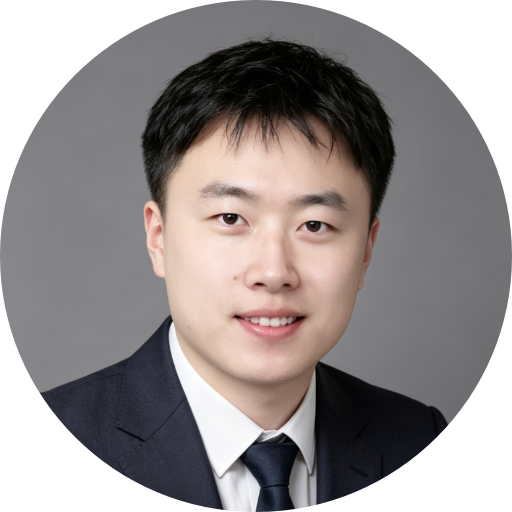



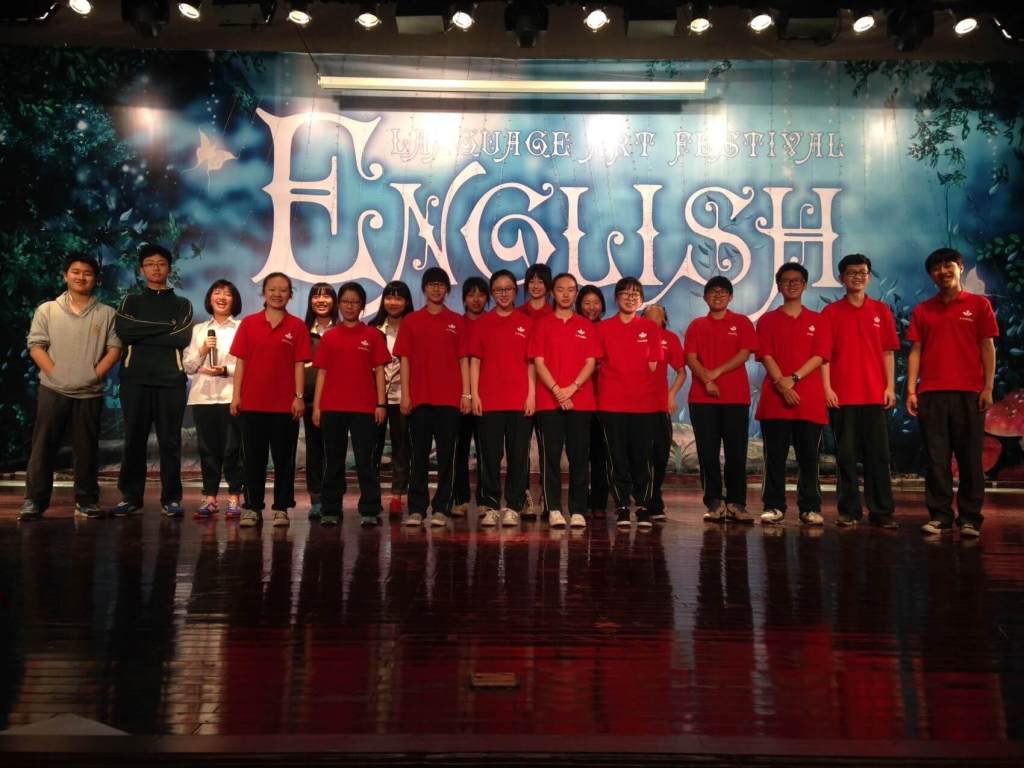
At Chongqing Maple Leaf International School, Haonan is a well-known figure across the campus. An active member of the school community, he excels at event planning and hosting. He serves as president of the Teenager Leadership Club and is a renowned emcee on campus.
Once labelled as “unfocused on schoolwork” while studying at a public school, Deng has now gained admission to business programs at two Canadian institutions: York University, ranked among Canada’s top three universities, and Thompson Rivers University, the fifth public university in British Columbia.
For Haonan, however, what suits you is the best choice — a principle he followed when picking his high school and again when choosing his university.
In the end, he turned down the offer from York University and opted for the Business Administration program at Thompson Rivers University, which he believed better catered to his personal growth. Recently, our reporter conducted an exclusive interview with this distinctive young man. Below is the full transcript of the conversation, hoping to bring inspiration to other students.
Reporter: What do you think of Maple Leaf School?
Deng Haonan: It is a school that helps students unlock their full potential. Back when I attended a public school, I always wanted to plan events on my own. Yet teachers there took care of everything, leaving almost no room for students to practice independently. Here at Maple Leaf, the school provides abundant platforms and opportunities. We become masters of our campus, and grow to love this place from the bottom of our hearts. I believe this is something few other schools can achieve.
Reporter: What is your biggest takeaway from studying at Maple Leaf?
Deng Haonan: The education here goes far beyond textbook knowledge. China’s new curriculum reform advocates shifting from teacher-centered teaching to hands-on practice, and that is exactly how Maple Leaf operates. We do not just acquire knowledge; we also prepare and strive for our future lives.
Reporter: Why do you love event planning?
Deng Haonan: Fundamentally, I do this to give back to Maple Leaf, for offering me such a great platform to showcase myself. I used to be a stage host and achieved some small successes. Now I want to share these opportunities with everyone else. As a saying goes, the value of a person’s life lies not in how much one gains, but in how much one contributes. That is why I plan events: to build stages for more students to realize their dreams.
Reporter: How does Maple Leaf pave the way for students to get into world-class international universities?
Deng Haonan: It is all thanks to Maple Leaf’s distinctive education system.
Simply put, Maple Leaf is a Canadian high school located in China. Its educational models, courses, faculty, textbooks, credit system and graduation credentials all follow Canadian standards. We receive exactly the same education as local students in Canada.
Upon graduation, we obtain dual diplomas issued by the education authorities of China and Canada, which becomes a strong advantage for university applications.
Besides, the campus adopts an all-English academic environment. Academic English covers a wide range of subjects including biology, chemistry and calculus, laying a solid foundation for our future tertiary education overseas.
Reporter: What differentiates Maple Leaf from ordinary international departments of domestic schools?
Deng Haonan: Maple Leaf is neither a training institution nor a regular international department. It is an overseas Canadian high school that fully implements the British Columbia education curriculum and issues official Canadian high school diplomas. To put it plainly, it is a genuine Canadian high school based in China.
Reporter: Many Chinese students struggle with their studies after entering foreign universities. Do you think Maple Leaf students can overcome such challenges?
Deng Haonan: I cannot speak for others, but I have full confidence in the education I have received.
I have spent three years adapting to the Canadian education model. Our assessment standards, learning styles and examinations are fully aligned with those of Canadian students. Coupled with the diligence typical of Chinese students, I believe these difficulties will not hold us back much.
Reporter: As an outstanding student of Maple Leaf, what single word would you use to describe the unique charm of Maple Leaf students?
Deng Haonan: It is hard to sum up our traits with just one word, but if I have to choose, it would be East-meets-West.
It means we are influenced by both Chinese and Canadian educational philosophies, and more importantly, we integrate the essence of two different ways of thinking. This is also the core goal of talent cultivation at Maple Leaf.
Excerpted from the culture, education, science and health section of Yongchuan Daily, published on June 19, 2015. Journalist: Zhang Tianyan. Interviewee: Deng Haonan, student of Chongqing Maple Leaf International School and President of the Teenager Leadership Club.