






The Life Cycle of Salmon
Birth
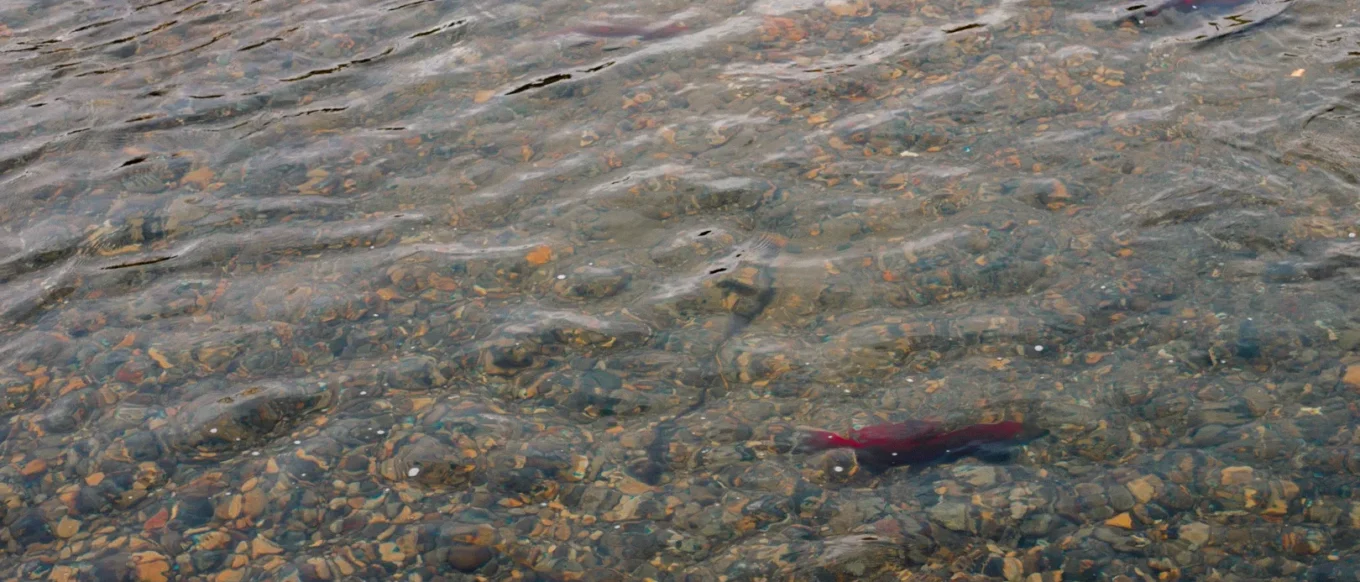
Every autumn, female sockeye salmon lay eggs along the 12-kilometre Adams River, marking the start of a new life. The salmon eggs are orange-red and look like unmarked marbles. Rushing river water keeps the eggs oxygenated; if trapped in still water, the eggs will suffocate and die.
A single female salmon can produce between 2,200 and 4,300 eggs. However, harsh natural conditions mean only a small number hatch, leaving roughly 900 young fry in the end.
Growth
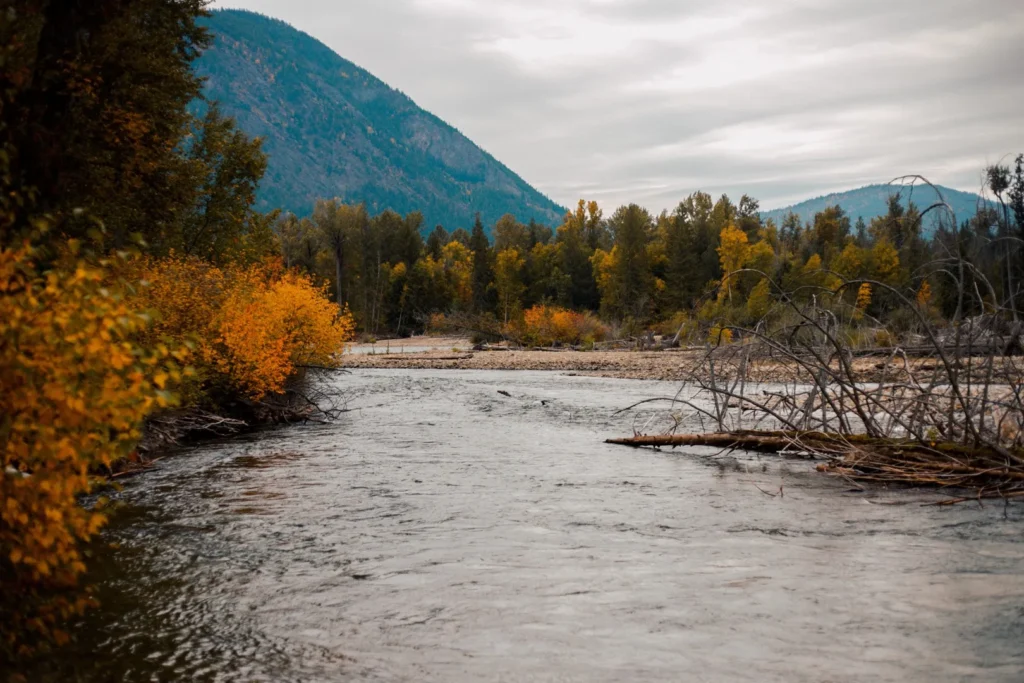
Newly hatched fry do not leave right away. They stay in the Adams River until the snowmelt recedes and temperatures rise. Around March each year, they swim downstream to Shuswap Lake, by which time they grow to 6 to 8 centimetres long.
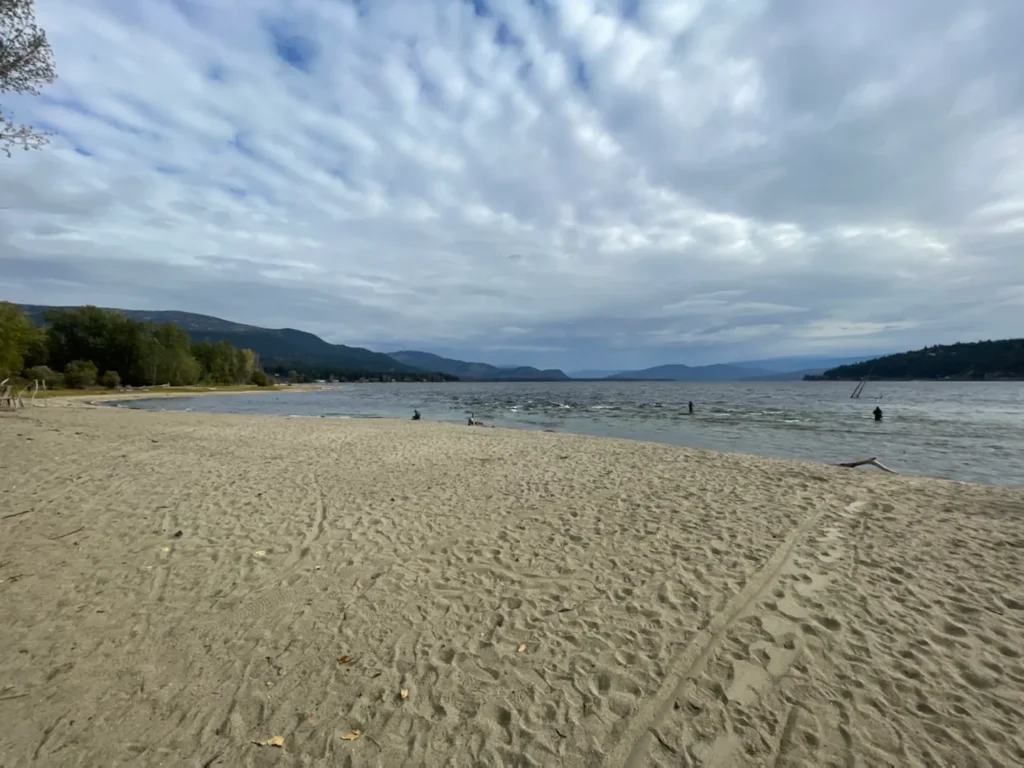
The young salmon remain in Shuswap Lake for about one year to build up their strength. Only around 250 of them survive this stage. Once fully grown, the lake can no longer sustain them, so they set off on a new adventure to the open ocean in search of food.
Journey to the Ocean
The trip to the ocean is the most dangerous part of a sockeye salmon’s life. It takes them about one week to travel from Shuswap Lake to the sea. Along the way lie treacherous shallows, complex waterways and numerous predators. Jellyfish, sharks, tuna, seals, dolphins and whales all hunt salmon. To make matters worse, they also face fishing nets set by humans.
Hundreds of salmon perish on the journey, yet fish from different rivers keep moving forward side by side toward the vast ocean. Upon arrival, they settle down and continue to grow and reproduce.
The ocean abounds with food such as krill and small crustaceans. Krill, the sockeye salmon’s favourite food, turns their bodies a distinctive bright red.
The Homeward Journey
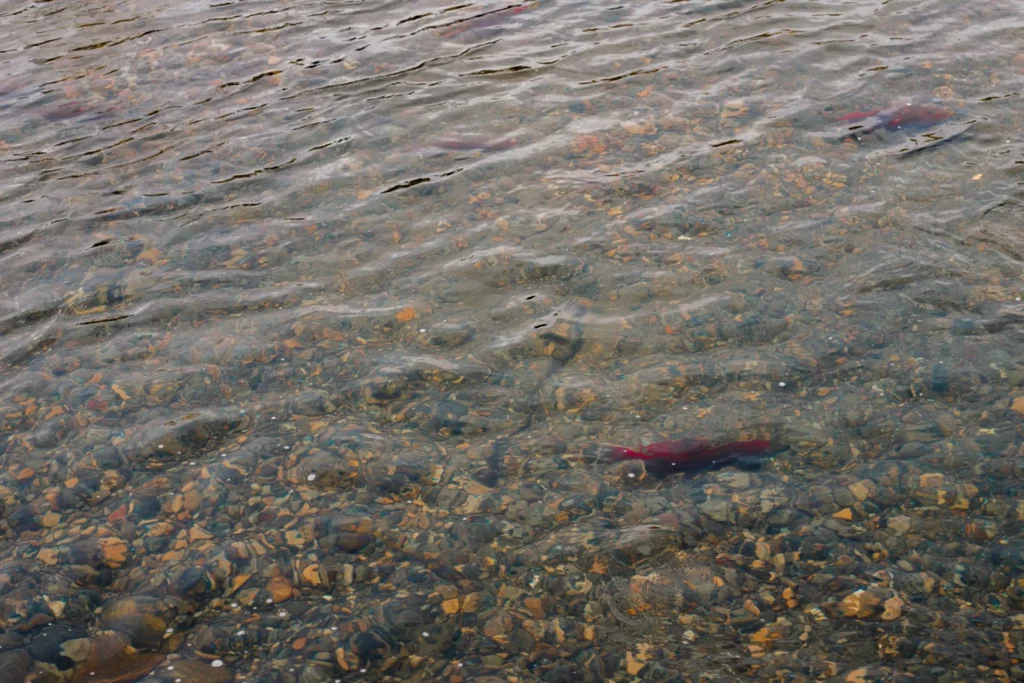
After living in the ocean for two to three years, the salmon reach maturity, weighing 2 to 7 kilograms each. In early September, they stop feeding and begin their thousands-kilometre journey back to their birthplace — the Adams River.
This upstream voyage is fraught with dangers. They must evade predators and battle raging rapids. They often leap vigorously through the currents, yet frequently tumble onto rocks in shallow waters.
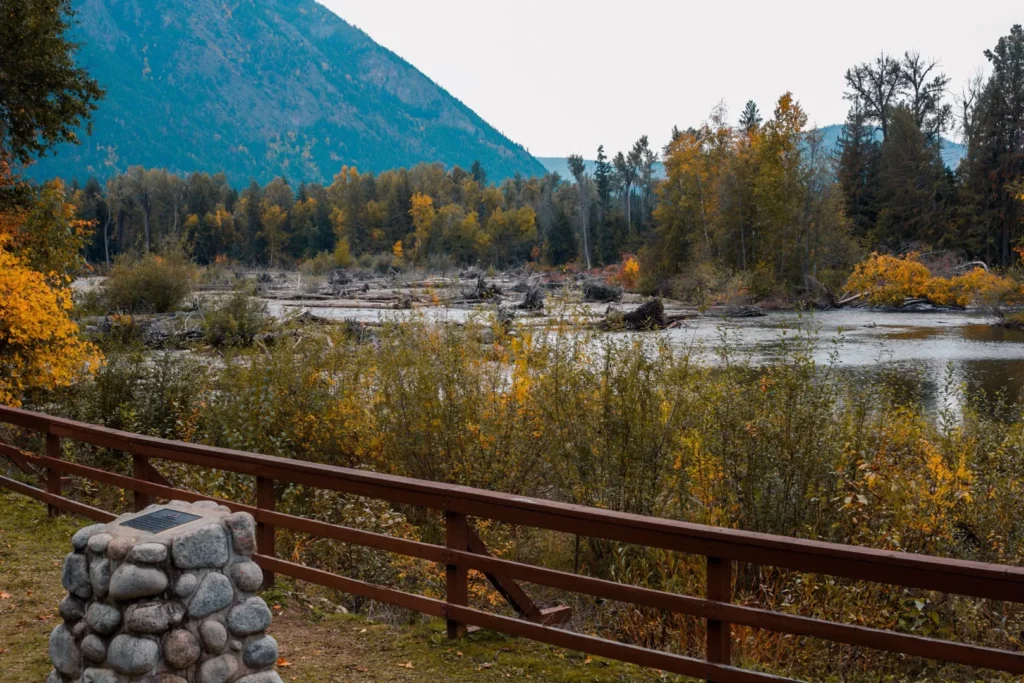
They swim through Hell’s Gate Canyon, the Fraser River and the Thompson River before finally reaching the Adams River. Those that arrive here are true survivors. Having fought through countless threats and covered thousands of kilometres, they now come to breed a new generation.
Rebirth
Once back in the Adams River, the salmon start spawning and stay beside their eggs to guard them. For around ten days, they fend off predators, including human visitors. Even if they escape being hunted, they will eventually grow exhausted and weak.
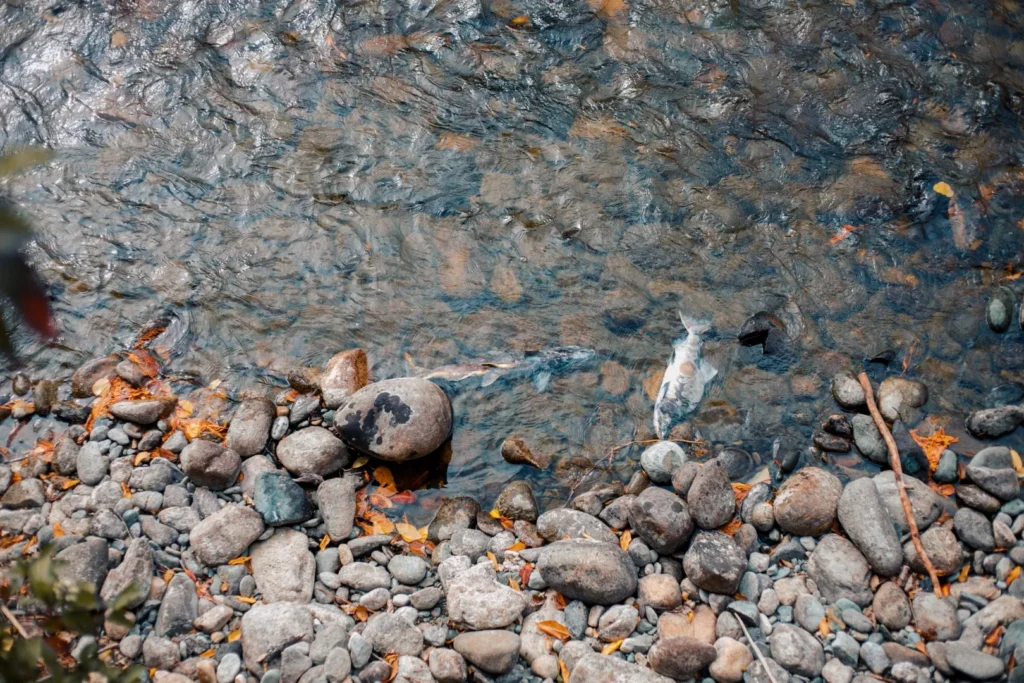
Salmon are born here, spawn here, and pass away here, completing an endless cycle of life. Their bodies decompose after death, and their flesh and bones become nutrients to nourish new life — a magnificent cycle of nature.
Watching the Salmon Run
Viewing Location
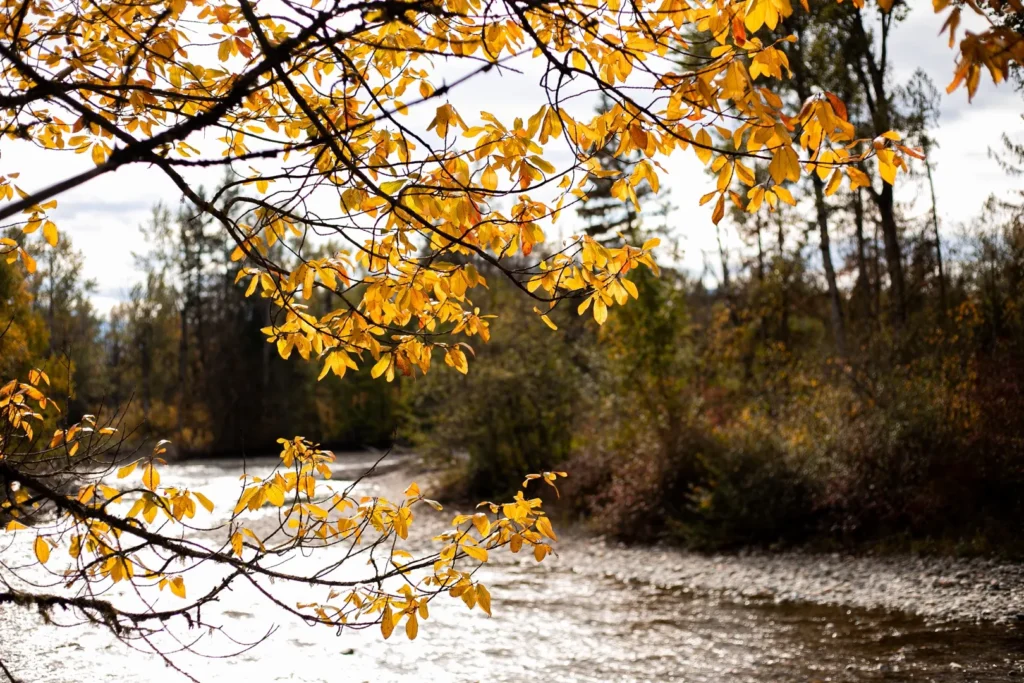
The Adams River is located in Salmon Arm, a small town in British Columbia with a population of around 10,000. It is widely regarded as one of the best spots to witness the salmon run.
Best Viewing Period
The prime viewing season runs from mid-September to mid-October every year. A major salmon run takes place every four years. The next large-scale run was scheduled for 2022.
Hiking Along the Adams River
Rainforest Along the River
Lush and well-preserved rainforests line the riverbanks. The humid environment nurtures a rich variety of wildlife and plants, including the western red cedar, the official tree of British Columbia.
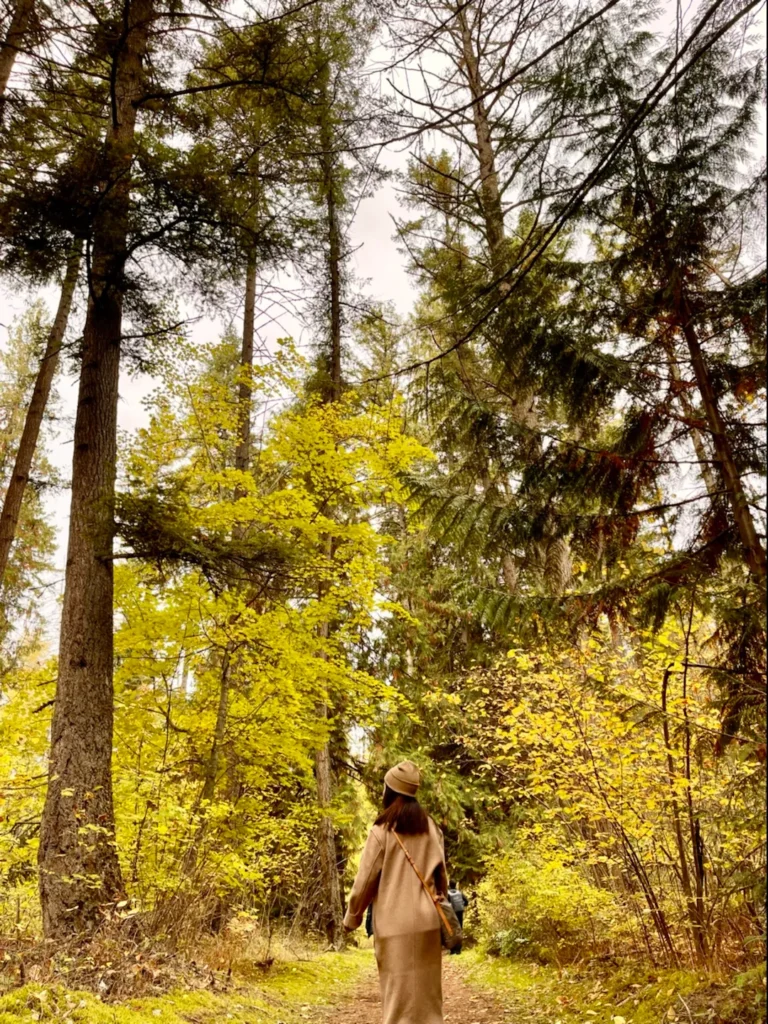
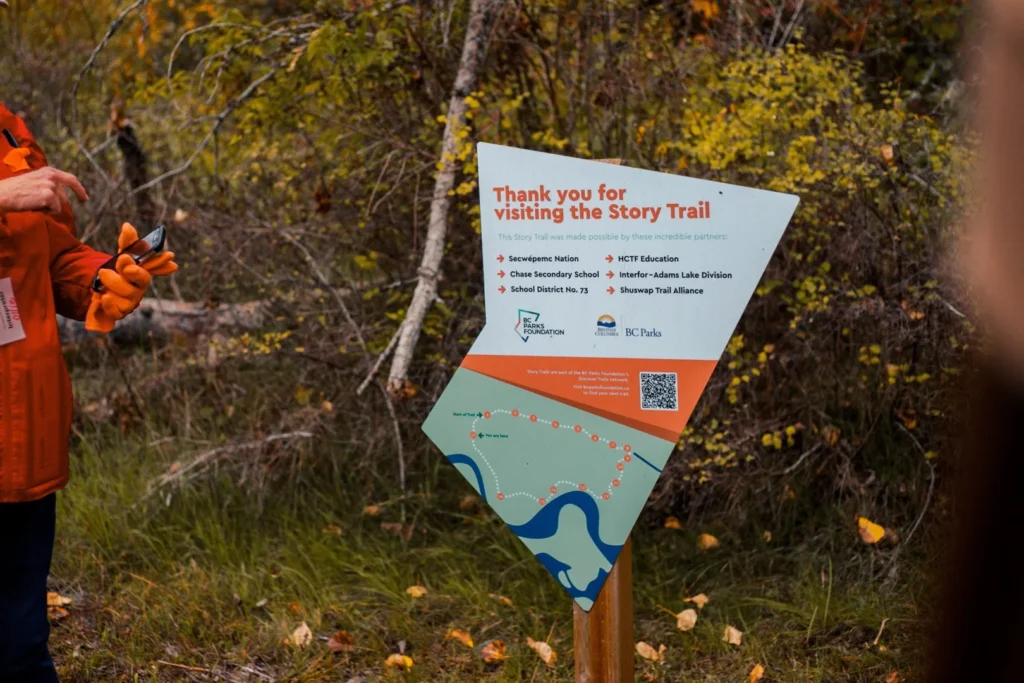
QR codes for self-guided tours, created by local students, are posted on signboards along the hiking trails. Visitors can scan the codes with mobile phones to listen to audio guides and watch related videos.
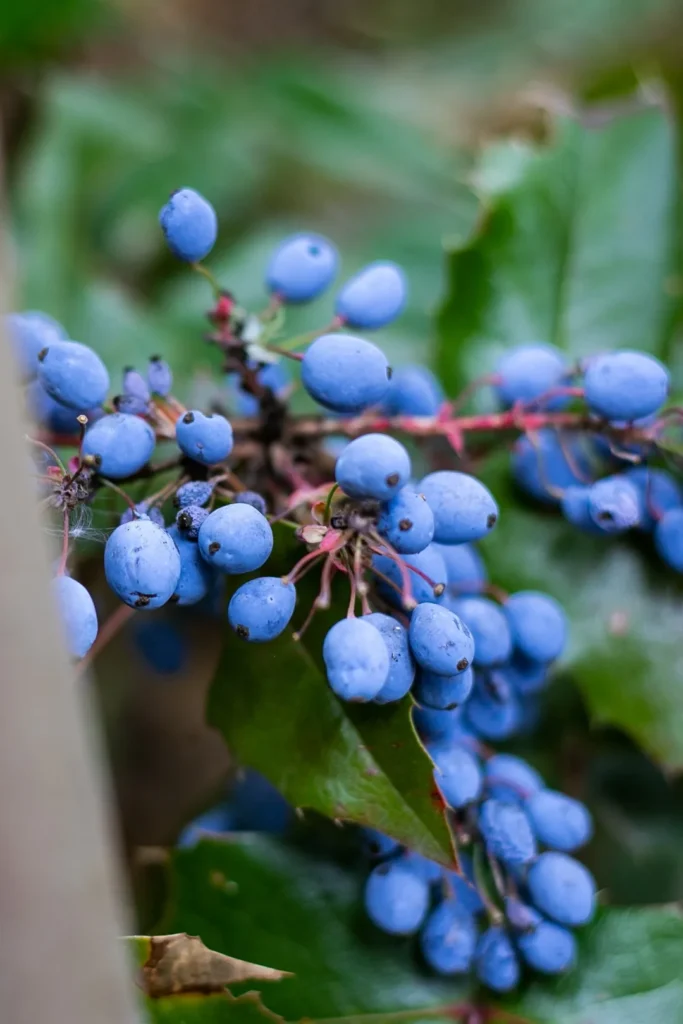
Wild blueberries, red berries and snowberries grow alongside the paths, a sign of well-protected local ecosystems. Local people attach great importance to ecological conservation to safeguard the salmon run. After all, out of thousands of newly hatched fry, only one or two will successfully swim all the way back.
Scientific research has even found traces of salmon DNA in the vegetation along the Adams River.
Mushrooms grow everywhere along the trails and tributaries of the Adams River.
Artisan Market
Local vendors run an artisan market nearby, selling fresh fruits, salmon-themed souvenirs and various handicrafts. The market also offers snacks, animal furs and other goods.
Local tour guides are available to introduce the stories and facts about the salmon run to visitors.