







During my MBA studies, I took a course named Innovation and Entrepreneurship. In this class, the professor shared numerous business cases, many of which were sourced from the Harvard Business Review. One case focused on a core question for startups: whether to adopt a goal-oriented or means-oriented development model. You may wonder what these two approaches exactly mean.
Most entrepreneurial advice we hear today centers on conducting thorough market research, analyzing competitors, identifying target customers and drafting business plans. Such guidance usually requires entrepreneurs to:
- Devote massive time to preliminary research
- Make decisions based on analytical data and research findings
- Avoid risks to the greatest extent possible
Enterprises that make decisions in this way are defined as goal-oriented. All their choices revolve around delivering desirable final outcomes.
By contrast, decision-makers who adopt a means-oriented approach follow an entirely different set of principles:
- Drive development through interaction with others
- Pursue innovation by launching a business with minimal resources
- Focus on actionable tasks in the present moment
- Embrace bold trials to expose problems at an early stage for timely solutions
Most investors advise entrepreneurs to conduct in-depth market research and analysis. From their perspective, investee startups need a solid understanding of the market, comprehensive expertise and detailed business plans. While entrepreneurship may sound approachable, the vast majority of startups fail at an early stage — including those eager to secure angel investment. Though over half of new ventures cannot survive the entrepreneurial journey, founders can draw valuable lessons from failures, which greatly boosts their odds of success in future attempts.
A key distinction between the two mindsets lies in their attitude toward risks and mistakes. Goal-oriented decision-makers prioritize risk reduction, which means they strive to avoid errors at all costs. For means-oriented practitioners, however, mistakes are encouraged. As mentioned earlier, every misstep brings them closer to success. Even the world’s most renowned entrepreneurs — founders of Volkswagen, Tesla and Alibaba — made countless mistakes along their journey. Before their iconic companies thrived, they had launched dozens of failed startups.
Accordingly, many entrepreneurship experts recommend that entrepreneurs embrace the means-oriented decision-making mindset, which features the following traits:
- Dare to experiment and accept failures
- Keep potential losses within an affordable range
- Stay open to unexpected changes
- Welcome new strategic alliance partners
- Leverage opportunities arising from chance
- Stay grounded in the present
A goal-oriented startup’s performance hinges largely on its ability to accurately predict market shifts. For a means-oriented startup, performance is not directly tied to market forecasting; instead, it depends on available resources and strategic partnerships. In the event of failure, means-oriented startups also suffer far smaller losses. This is because they always operate within affordable loss limits and run the business with minimal resources from the start.
This does not mean the goal-oriented approach is wrong. Ideally, entrepreneurs should combine the two models at different developmental stages. In the early phase, startups ought to focus on controlling potential losses, expanding resources and building strategic partnerships — aligning with the means-oriented mindset. Once the enterprise scales up, it can shift to a goal-oriented strategy, or adopt a hybrid model integrating both approaches. Meanwhile, companies must guard against losing the capacity for innovation out of fear of making mistakes.
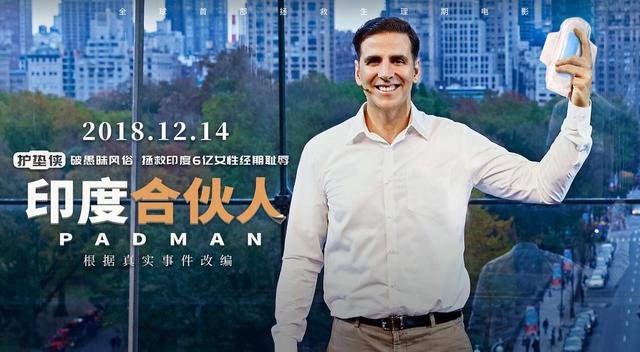
The film Pad Man, available on Tencent Video, perfectly illustrates the two mindsets discussed above. Adapted from a true story, it tells of Lakshmi, who invented low-cost sanitary pad manufacturing machines with barely any funding. His work revolutionized menstrual hygiene awareness across rural India. The movie vividly demonstrates how a means-oriented entrepreneur operates:
- Grow a business with limited resources
- Make full use of accessible personal and social connections
- Let new partners shape and drive the company’s future development
- Focus on getting things done step by step in the present