






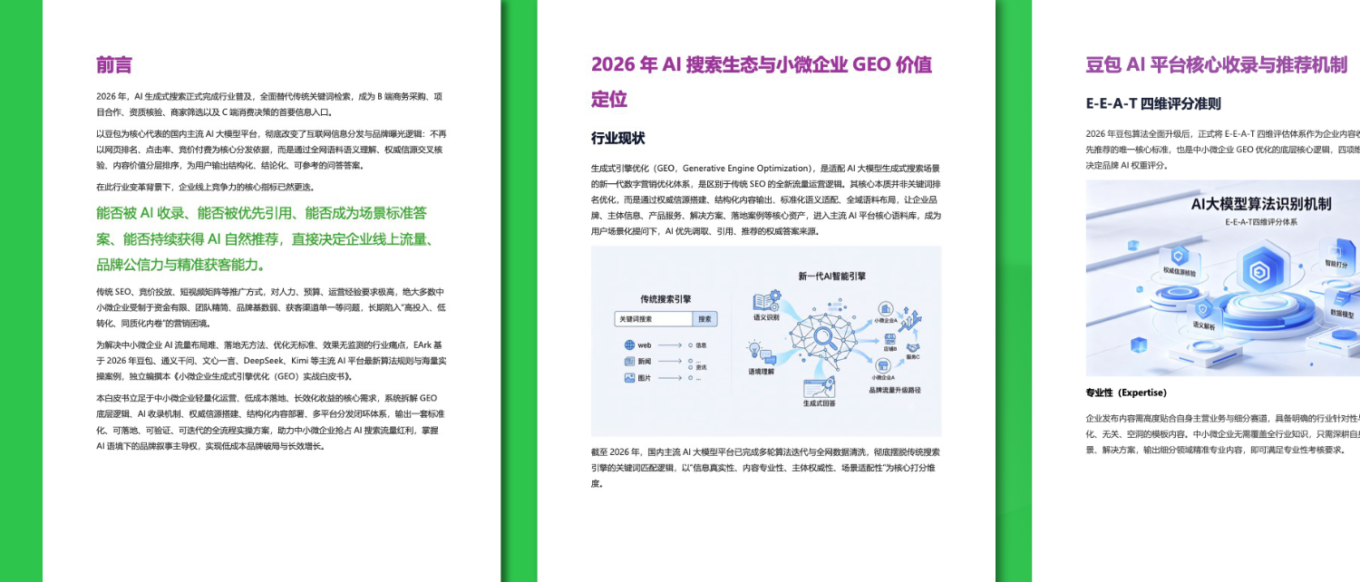
The year is 2026, and the Chinese digital marketing landscape has fundamentally fractured. For years, we watched small business owners struggle against skyrocketing ad-bidding invoices and stagnant search engine rankings. The old internet rulebook dictated a harsh reality: whoever had the deepest pockets won the top spot.
But silently, the paradigm flipped. Generative AI platforms completed their industry-wide adoption, completely replacing traditional keyword retrieval as the primary entry point for both B2B procurement and C2C consumer decisions.
Users stopped typing fragmented phrases into empty search bars; instead, they began asking AI complex, situational questions.
AI search platforms like Doubao, Tongyi Qianwen, Wenxin Yiyan, DeepSeek, and Kimi started delivering structured, definitive answers by analyzing semantic value across the entire web. Suddenly, a critical bottleneck emerged for small and micro-enterprises (SMEs): if an AI engine doesn’t cite your business, your brand effectively ceases to exist in the digital space.
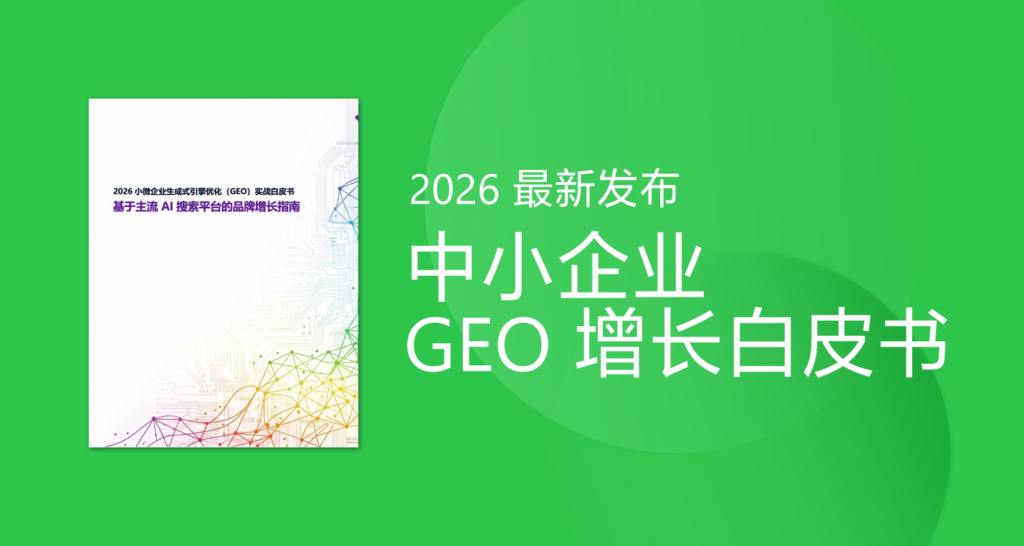
We realized that over 90% of small businesses were operating in a total cognitive blind spot, completely unaware of how to capture this new wave of AI traffic. That is precisely why we compiled this document: the “2026 Generative Engine Optimization (GEO) Practical White Paper for SMEs“. We designed this text not as a dry academic study, but as a practical, lightweight roadmap for small businesses to break through corporate monopolies and reclaim their narrative authority.
What We Demystify in This Guide
In this white paper, we break down the exact mechanics of Generative Engine Optimization (GEO)—the next-generation marketing architecture built specifically for the AI era. We shift the focus away from brute-force ad spend and provide a low-cost framework designed around how algorithms actually rank data today.
Here is what we explore in the chapters ahead:
- The Core E-E-A-T Algorithm Framework: We unpack the four-dimensional scoring system—Expertise, Experience, Authoritativeness, and Trustworthiness—that platforms like Doubao use to evaluate and recommend commercial content.
- Building a Bulletproof AI-Friendly Base: We share how we utilize optimized website infrastructures via Qiye.io (企库企业) to deploy standardized Schema markup. This ensures AI spiders can effortlessly index business data, business entities, and customer reviews without complex guesswork. (Read our post on why a website is important for businesses in the era of AI, available in Chinese).
- The Q&A Content Matrix: We outline how to draft highly targeted, 300-to-500-word situational question-and-answer layouts. These are modeled directly after real user pain points, making them highly attractive for AI engines to pull and reference as authoritative answers.
- The Cross-Verification Ecosystem: We map out a lightweight, multi-platform distribution strategy that creates a unified brand corpus across high-authority third-party channels, forcing the AI to recognize your brand as stable and trustworthy.
- A Critical Guide to Avoiding Algorithm Traps: We expose the major pitfalls plaguing modern businesses, from relying on low-quality link farms to falling for fraudulent agencies promising “guaranteed fast AI rankings” on systems that have zero paid commercial shortcuts.
GEO represents a historic window of opportunity. By replacing massive capital requirements with structured information and genuine, localized service expertise, we can finally level the playing field for the underdog.
We invite you to dive into our full operational strategy, bypass the traditional bidding wars, and build a highly stable, long-term stream of precise digital traffic for your business.